
TALES FROM THE CRYPT
Through A Glass, Darkly:
Matthew Rolston’s Vanitas
5 MIN READ
BY TOM TEICHOLZ

Halloween has become America’s most popular secular holiday. It’s the one time of year in which we agree to celebrate the dead, the undead, the ghosts and ghouls, vampires, werewolves and zombies in a festival of all that is morbid. This makes the late-October timing perfect for the debut of Matthew Rolston’s latest personal work: Vanitas: The Palermo Portraits, the culmination of a decade-long project of images made in the Capuchin Crypt in Palermo, Italy.
It is fair to say that Matthew Rolston, artist, photographer, music video director, creative director, and arts educator, is having what we call a ‘moment’. He recently received a lifetime achievement award from ArtCenter College of Design in Pasadena, California, where he was once a student, where he has taught for many years, and where, in 1998, he endowed the Matthew Rolston Scholarship for Film and Creative Direction.
In connection with the award, there was a gala dinner held at ArtCenter during the College’s recent alumni reunion weekend in which Paul Martineau, curator in the Department of Photographs at the J. Paul Getty Museum, presented Matthew with the award, a distinction previously conferred upon other well-known ArtCenter alumni such as multimedia artists Diana Thater and Doug Aitken and photographers Lee Friedlander and Hiroshi Sugimoto.
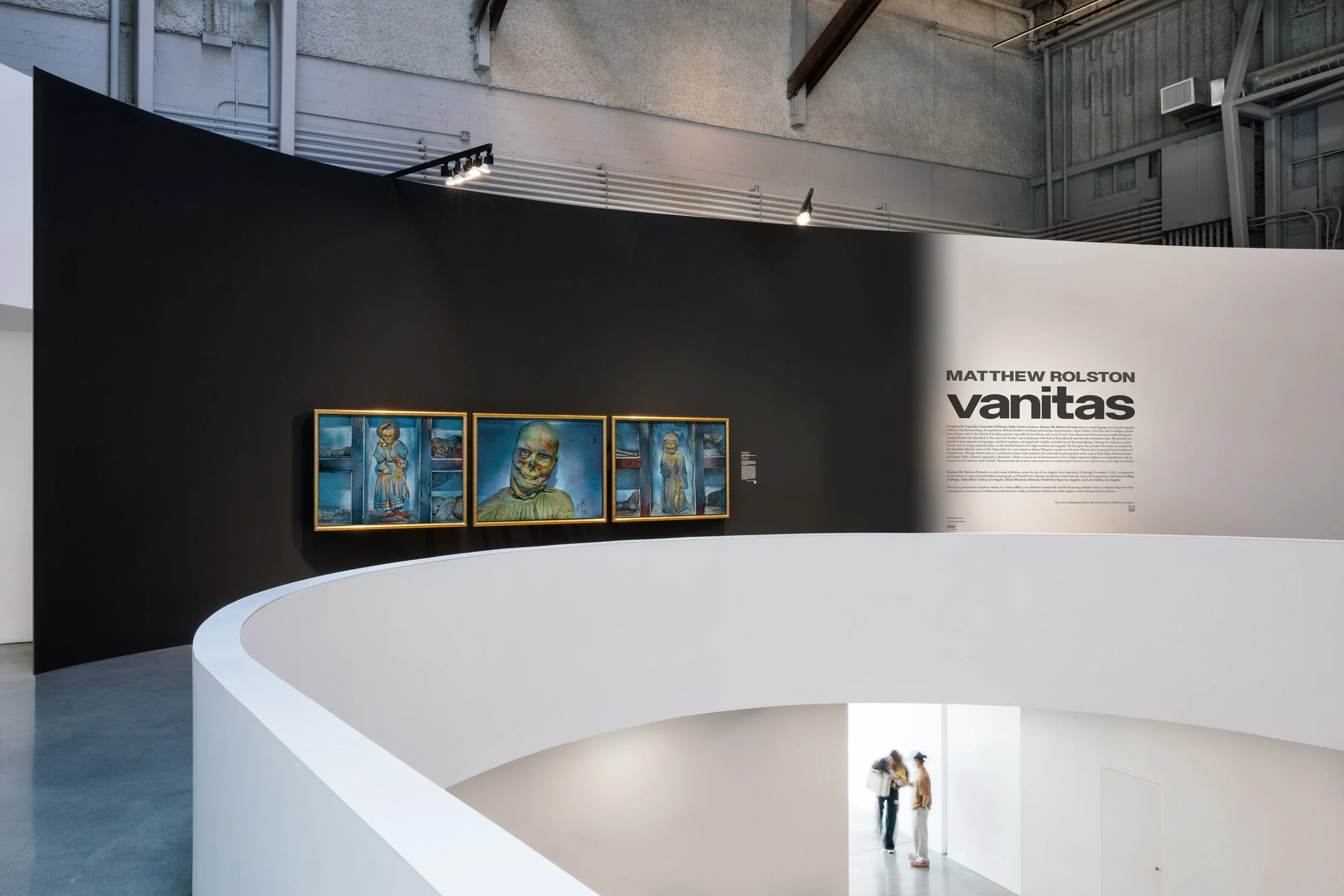
As part of that alumni weekend, Matthew was interviewed on stage in ArtCenter’s Ahmanson auditorium by Wall Street Journal and The New Yorker writer Christina Binkley, and a second time, a week later, in the College’s Mullin Transportation Design Center presentation space by curator, art critic and USC professor Dr. Rotem Rozental on the subject of Matthew’s ArtCenter Vanitas exhibition. A triptych from Vanitas is on show there, timed to the release of a gorgeous large format art book, published by Nazraeli Press.

I’ve been aware of Matthew’s work since the start of his career at Andy Warhol’s Interview (where I, too, got my start, and where we first met). I was also a good friend to his late brother, the New York gallerist Dean Rolston, with whom I was in graduate school.
You can never predict what Matthew will do next. In his professional work, he has always loved to marry contradictions and highlight what he calls ‘the unity of opposites’ – when things are one thing and their opposite at the same time. He calls this cognitive dissonance “the special sauce.” What has always distinguished Matthew’s editorial work, as well as his personal fine art projects, is that although he works in what people believe to be an objective medium – photography – he is, in fact, a conceptual artist.
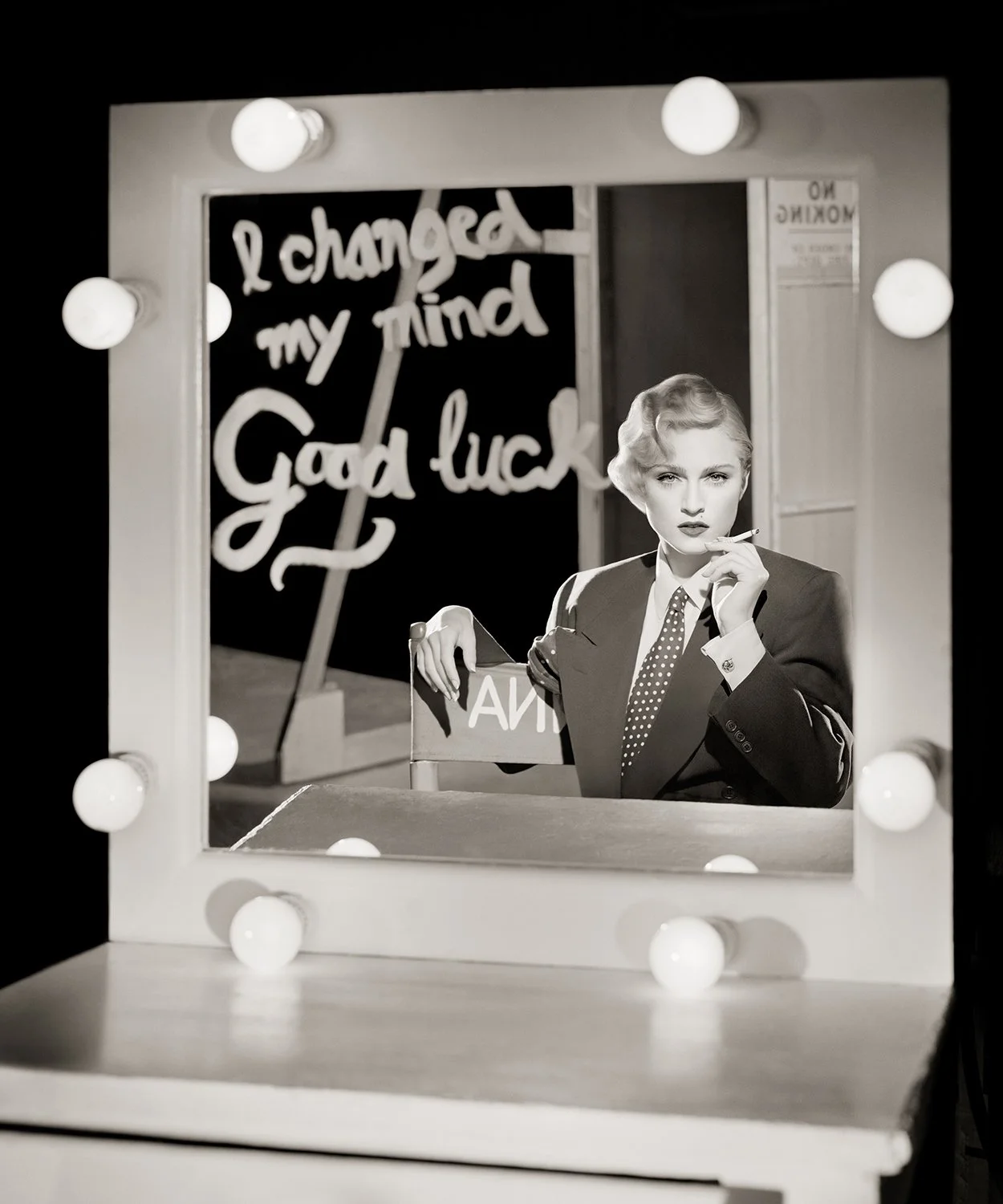
In Matthew’s portrait work, there has always been a self-aware irony present in how the subjects are styled and posed. For Interview, he often made contemporary black and white portraits using classic Hollywood lighting and staging reminiscent of MGM’s photographer George Hurrell, the golden-age master of glamour. In his work for Interview, as well as Rolling Stone (for whom he shot more than 100 covers), Matthew gave music legends the theatricality of vintage Hollywood stars. In his music video and commercial work, there is a certain maximalist tendency, as if the artists are icons – and more than a few were (or are).

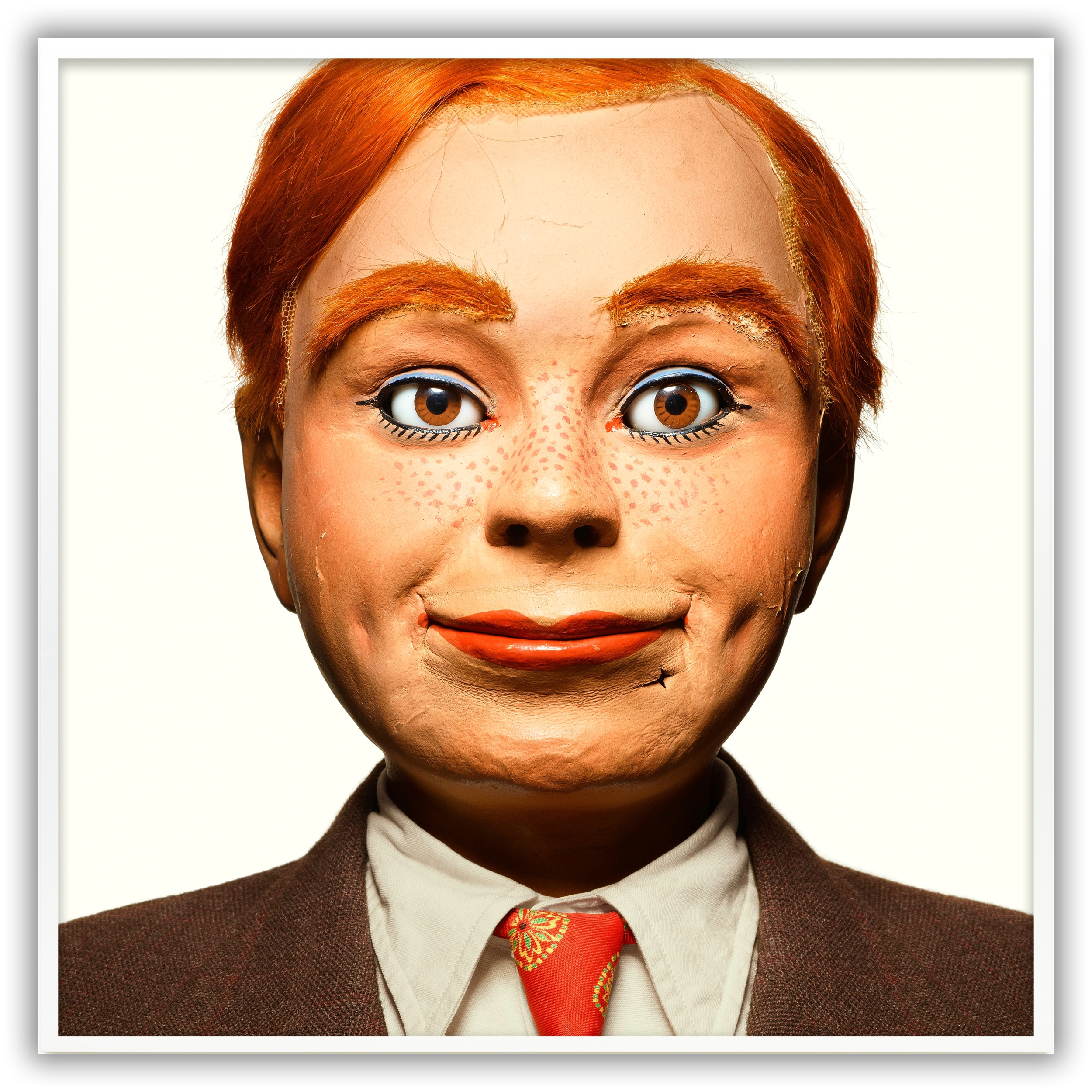
In Matthew’s personal artworks, he has set a variety of challenges for himself. In the first of his fine art projects, Talking Heads: The Vent Haven Portraits, he photographed ventriloquist dummies collected at the obscure Vent Haven Museum in Fort Mitchell Kentucky. The oversized, square format and white backgrounds of the dummies’ spookily realistic portraits challenge us to consider what it is that makes us most human. Matthew describes the Vent Haven Portraits this way: “The Talking Heads project became a fine art series of monumentally scaled, forensic looking closeups that explore the sense of life in these inanimate objects and how we project our life force into images of humans.”

For Matthew’s second personal project, Art People: The Pageant Portraits, he photographed volunteer performers in elaborate costume and makeup as they impersonate well-known works of art in The Pageant of The Masters, the long-running summer performance of tableaux vivants in Laguna Beach, California. In this series, Matthew poses a series of questions: What is art? Who is an artist? And why do we make art? Are the figures in the Pageant Portraits themselves artworks – or do his photos make them so?
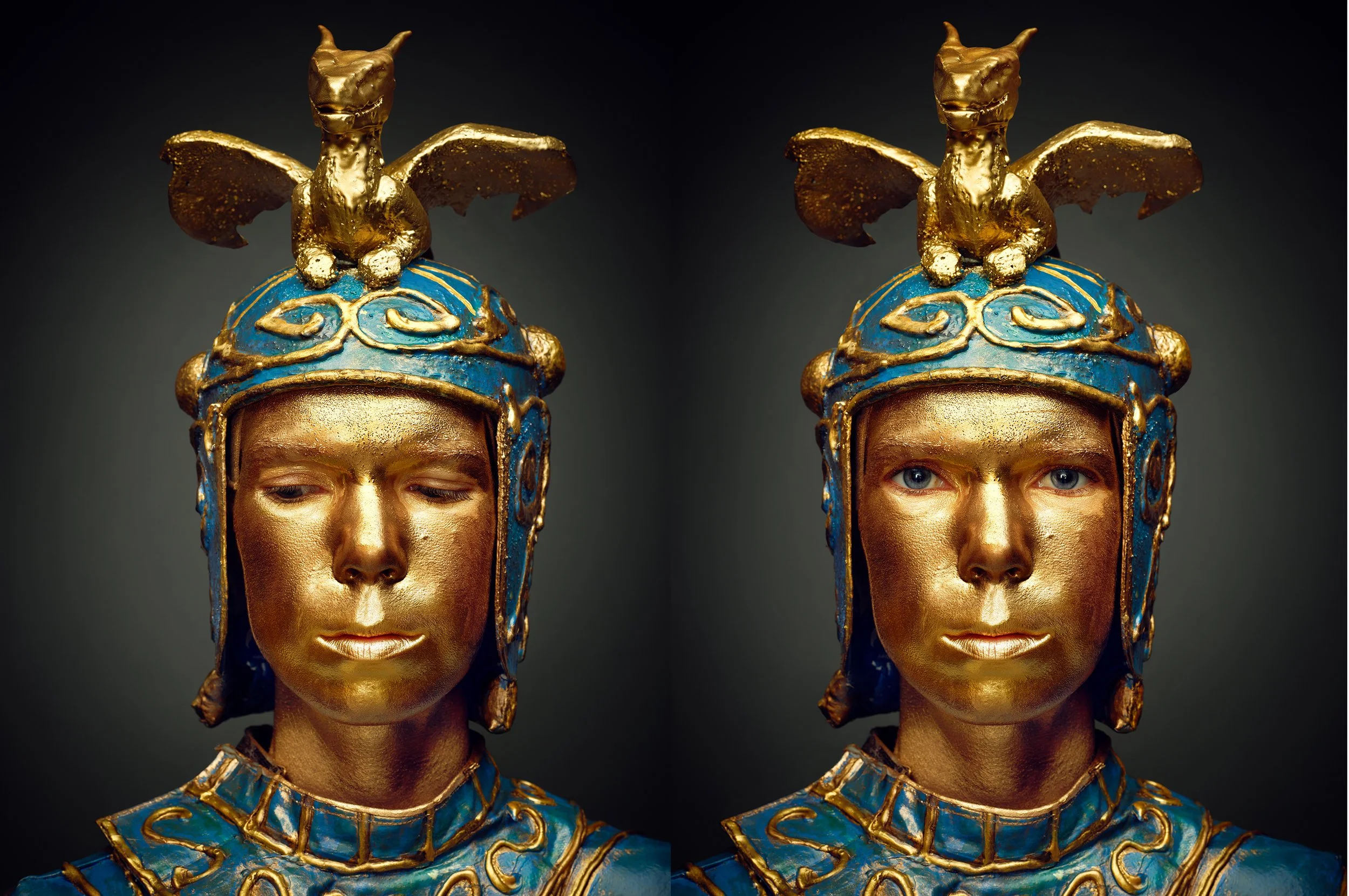

During his conversation with Christina Binkley at ArtCenter, relating to his move away from commissioned work, Matthew said that the more successful he became in his commercial career, and the more money was at stake for the client, the less creative freedom was at hand. At the same time, social media in all its forms was wresting control of celebrity image-making, in every sense, from the photographer to the subjects themselves. As an example, Matthew cited Kim Kardashian, who is in complete control of her image. At the same time, Matthew said, we are all becoming creative directors of our own ‘brands’.


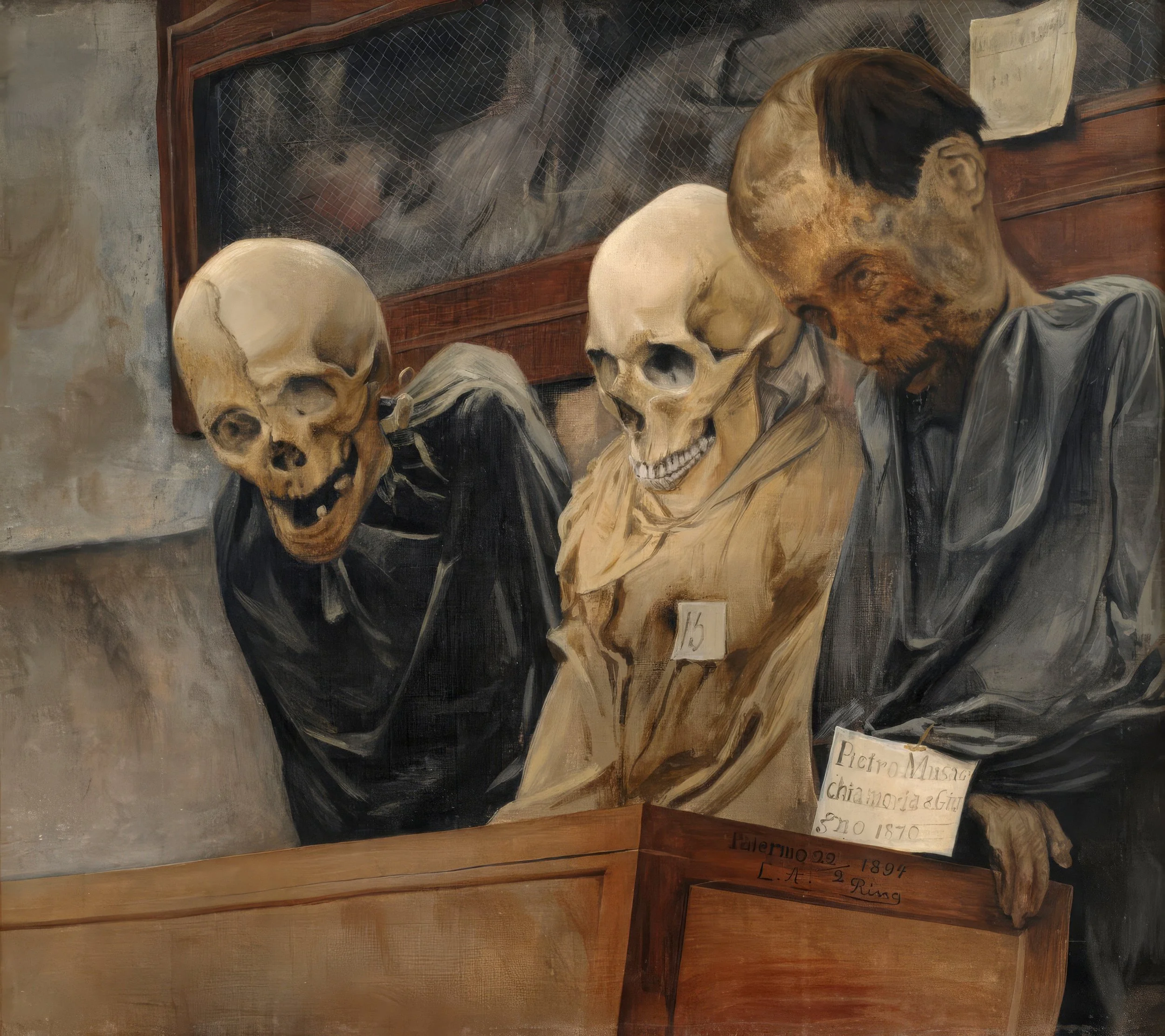
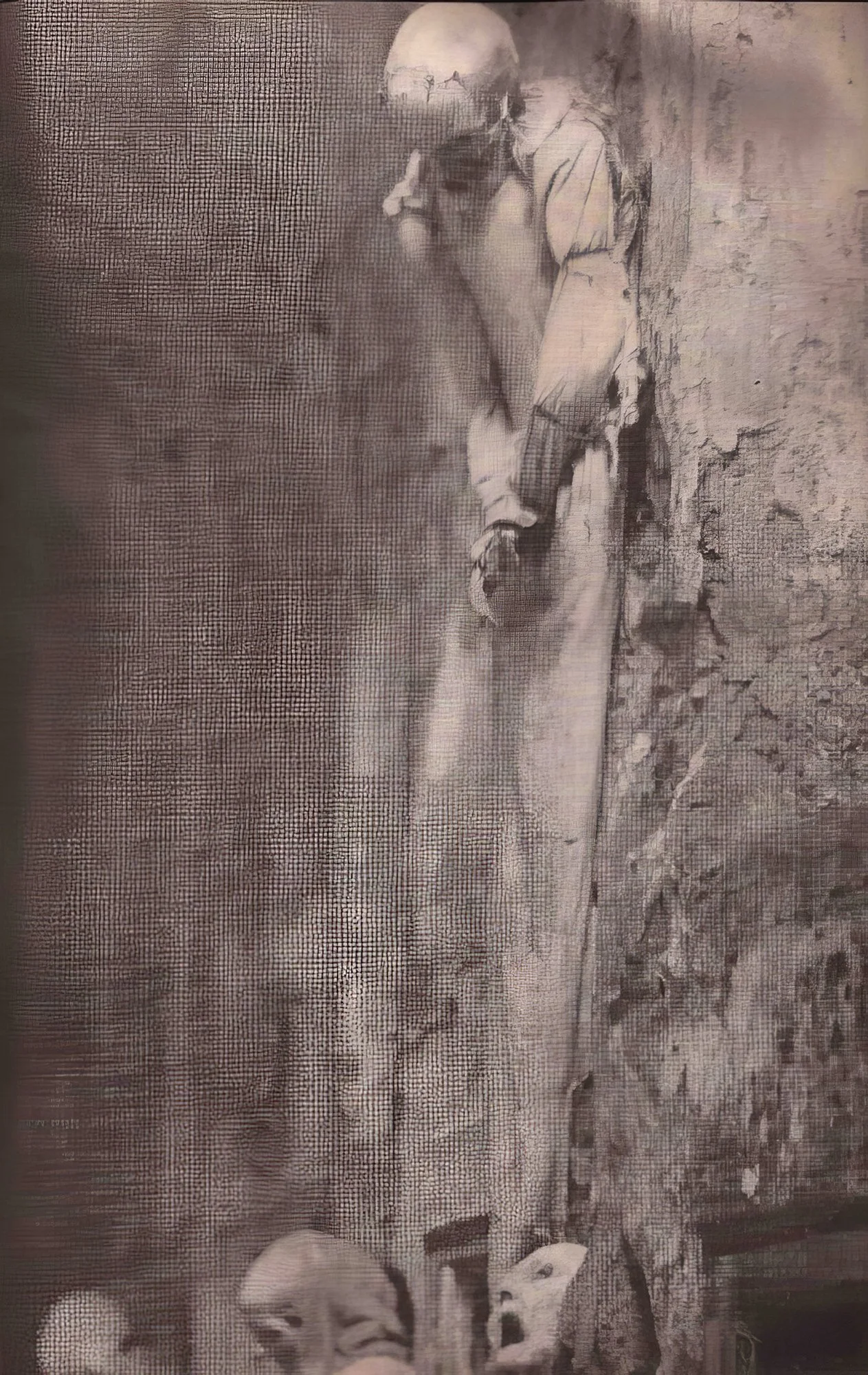
His current series, Vanitas: The Palermo Portraits, is an art project that has consumed Matthew for more than a decade. The Catacombe dei Cappuccini di Palermo is an ancient underground necropolis in Sicily, a crypt that has since become something of a macabre tourist attraction. The history of the crypt goes back to the 16th Century. When Palermo’s Capuchin monastery outgrew its cemetery, they built the crypt beneath, where in 1599, they mummified one of their order. At first, the crypt was restricted to their friars. However, over time, Palermo’s aristocratic and wealthy residents paid to be mummified there, often in their finest attire As long as their relatives paid, their corpses were maintained. The legend is that upon the rapture, those in the crypt would be among the first to enter the kingdom heaven. They remained standing in their finery, ready to be risen up. But by the 20th Century the crypt stopped taking in corpses and became a tourist attraction.
The crypt has been inspiration to a variety of artists over the years. Among the most notable are the Expressionist painter Otto Dix and Danish Symbolist Laurits Andersen Ring, the photographer/painter Sigmar Polke, and photographers Peter Hujar and Richard Avedon.
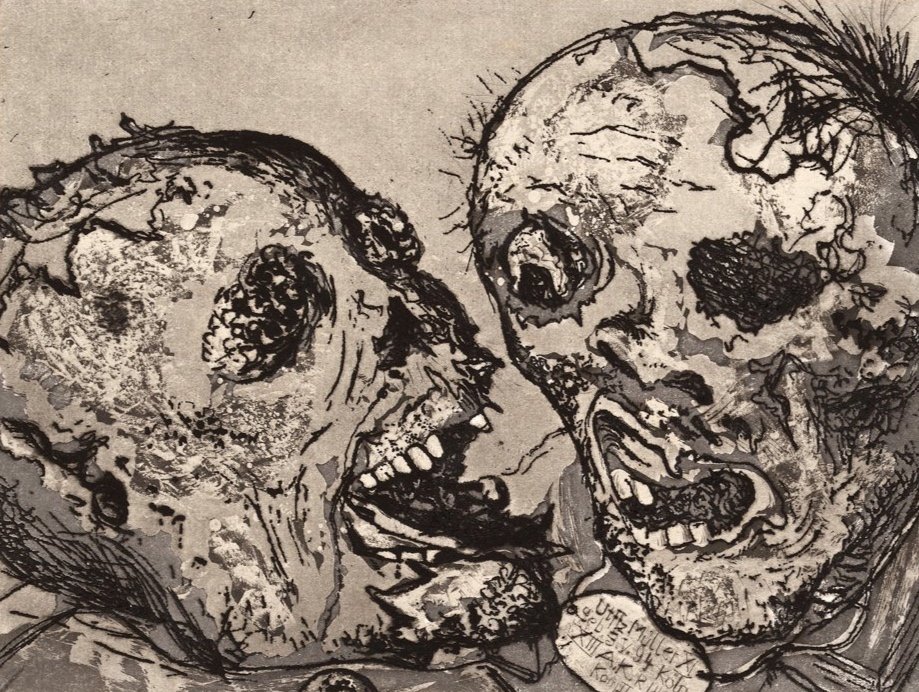

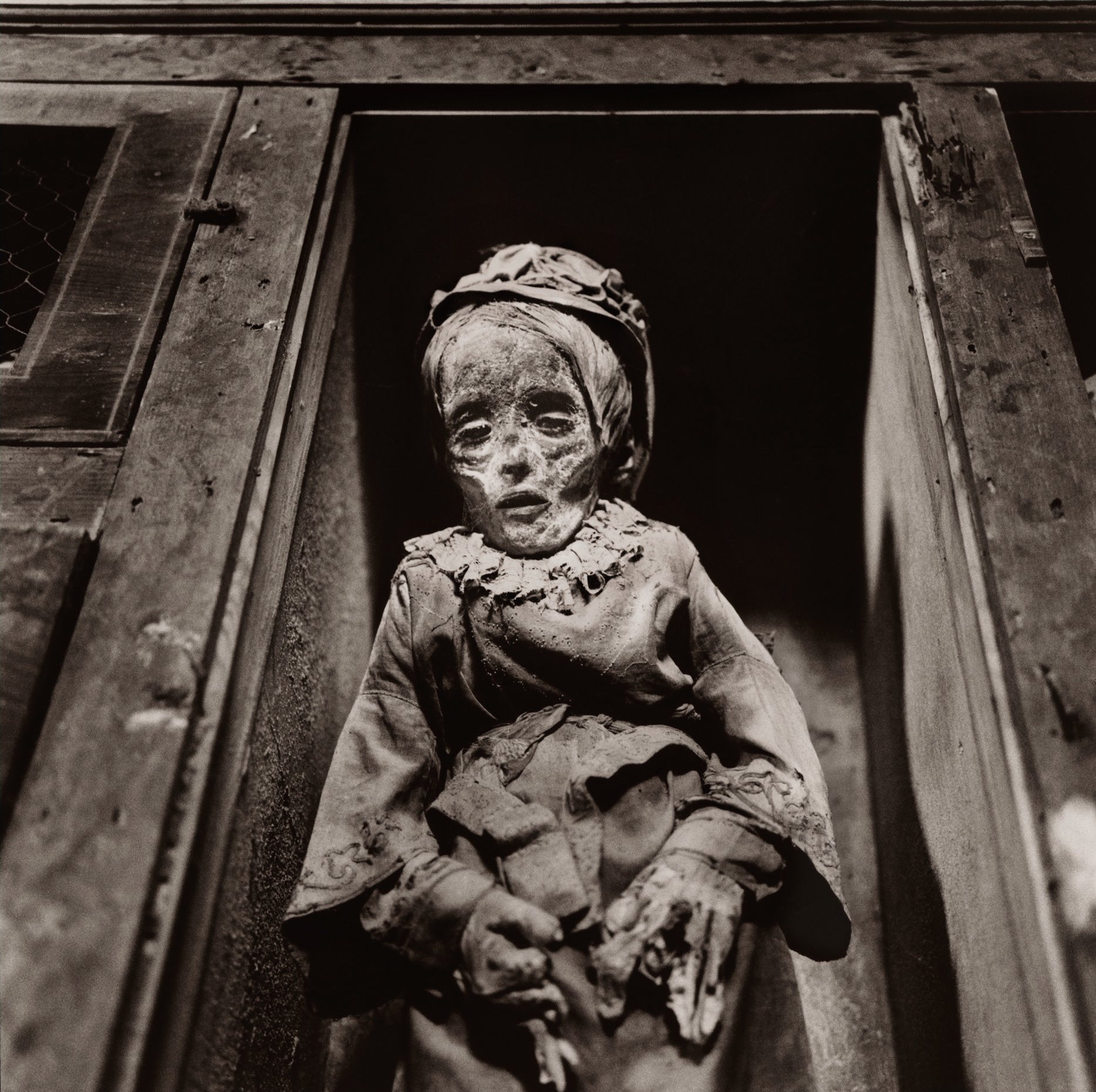

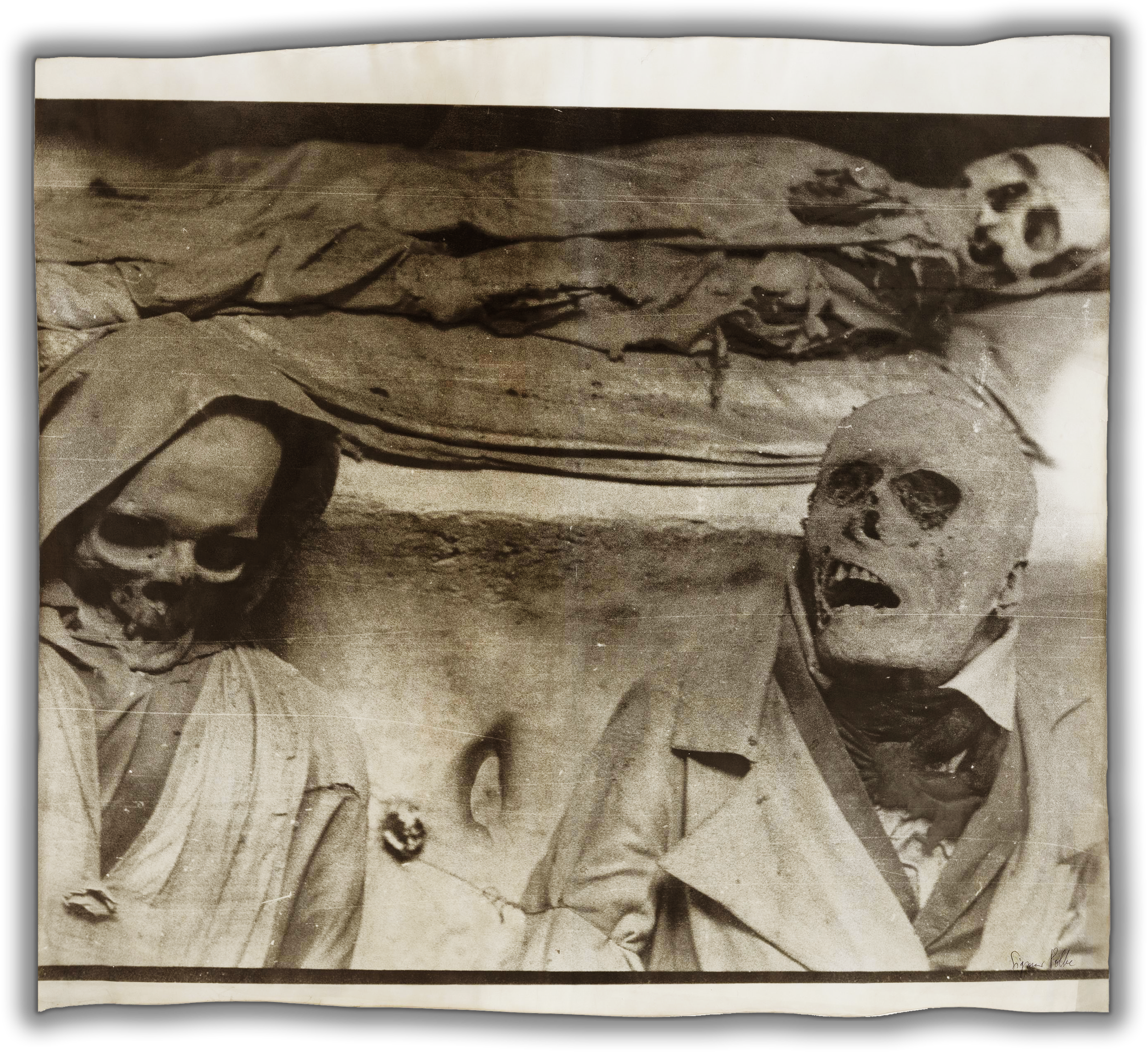


The connection to Avedon is significant for Matthew because, as he has often told the story, on his very first day at ArtCenter, he encountered his photographic hero, Richard Avedon there. Avedon was a visiting artist presenting an exhibition of his self-commissioned fine art portraiture at the College. Just out of his teens at the time, Matthew could not foresee that, like Avedon, he would himself someday forsake a commercial career for a late-in-life transition to making more personal artworks, that a subject he would work on would be one that also captivated Avedon, and that someday he too would exhibit work at the College.
As Matthew reaches a more mature phase in his life and professional career, he has chosen to confront the existential questions of: Where is the end point? What becomes of us after we die? What, if anything, lives on? What is life? What do corpses reveal to us about life? And what do they reveal about death?


In a short documentary created for the project, Matthew comments about Vanitas as follows: “I went searching for the truth in my latest project. In a way, that's what these mummies do for me. They tell me true stories about life, death, and art. Photographing the mummies was strange, yes, but it was also deeply moving. In those faces, I saw both the fragility of life and the persistence of beauty. I discovered the vanity of so many humans and their desire to cheat death or touch immortality. There is no immortality. There's only eternity. And dust.”
Matthew’s Palermo Portraits have been printed as unique art works. Not as multiples or editioned (which is typical in photographic practice) – more like the way in which paintings are presented. Rather than being exhibited together in one place or in one room, as is traditionally done, Matthew has created ten unique monumentally-scaled works, a few of which are exhibited in each of four locations: a site-specific triptych at ArtCenter’s Mullin Transportation Design Center in Pasadena, four individual prints at The Fahey/Klein Gallery in Los Angeles, and one each at The Daido Moriyama Museum / Daido Star Space in DTLA and Los Angeles’ prestigious Leica Gallery.
A limited edition Nazraeli Press monograph of Vanitas: the Palermo Portraits by Matthew Rolston offers 50 four-color plates where one can see the magic Matthew has created with these images.

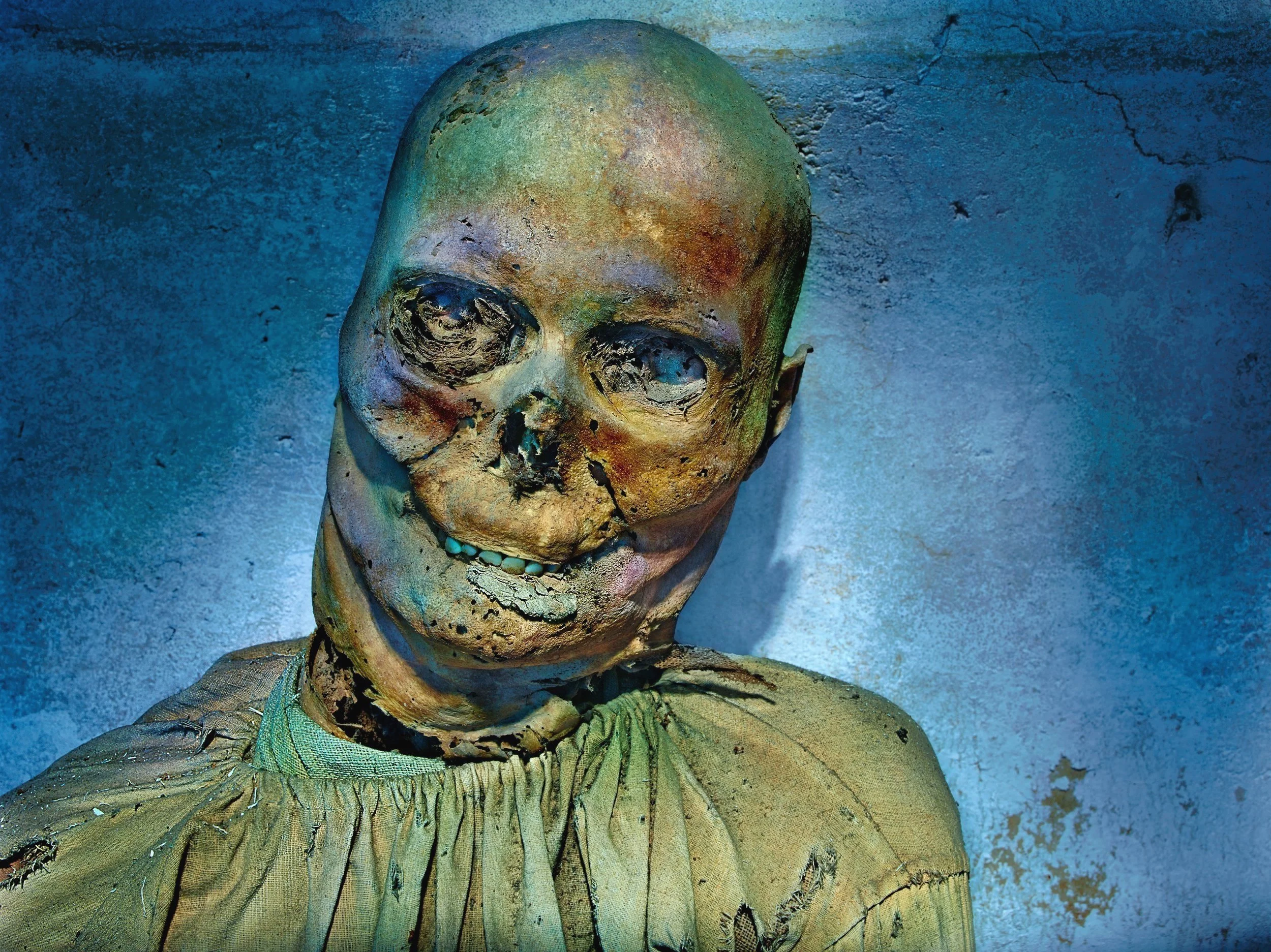
Matthew photographed the Palermo mummies in their crypt, in a series of night shoots, using theatrical gels of three different wavelengths of light (the images look digitally colorized, but that is the lighting), creating a certain chromatic luminescence. It is beautiful lighting scheme for a truly grotesque subject.


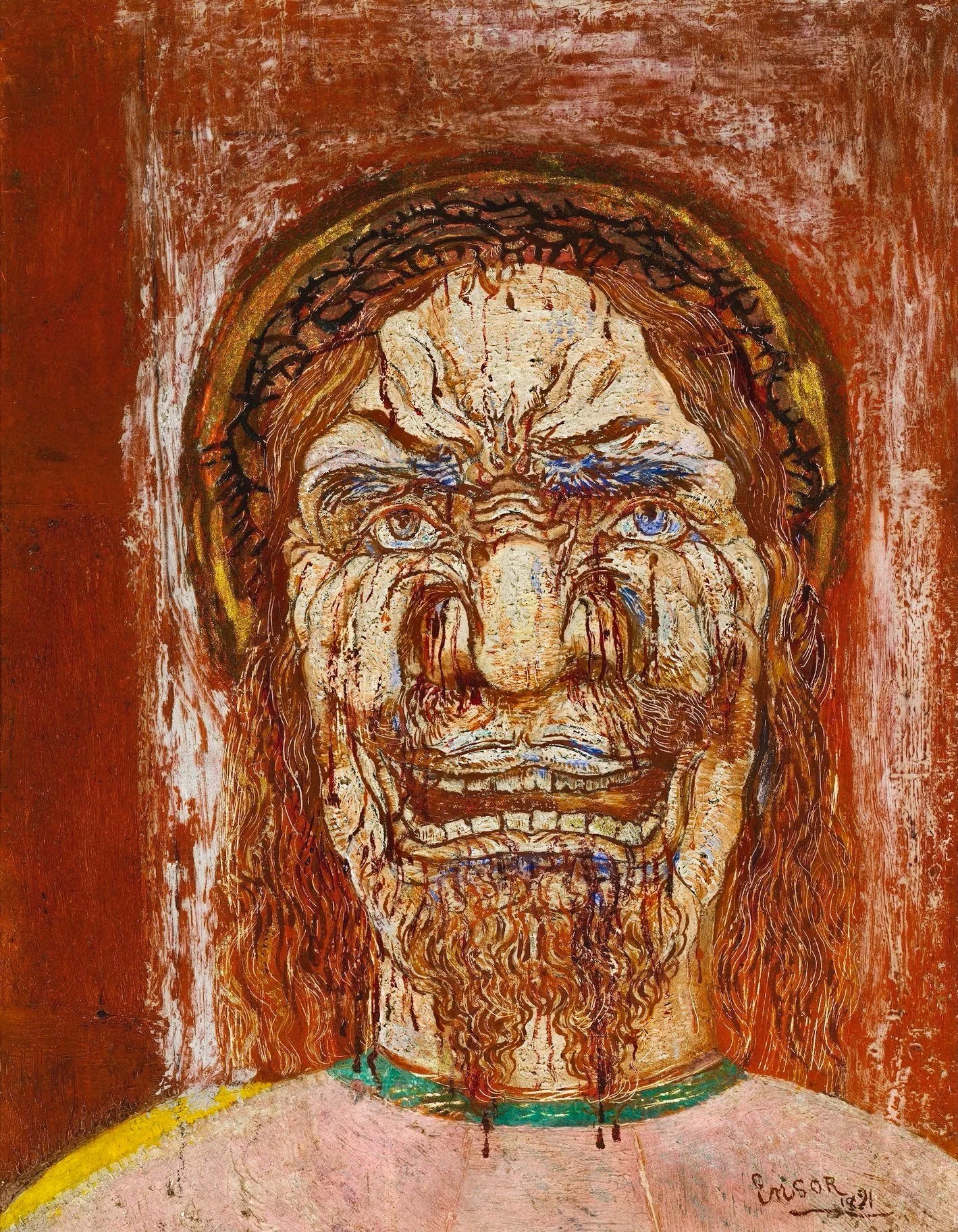
With the Palermo Portraits, Matthew has created work that recalls Expressionism, referencing artists such as Egon Schiele and James Ensor, and in some works, an echo of the disturbing 1953 portrait of Pope Innocent X by mid-twentieth-century British painter Francis Bacon.

There is an uncanny and eerie way that the Capuchin corpses hover between life and death, seemingly smirking, even laughing, as their faces are in the process of crumbling. The figures are contorted in ways reminiscent of the gestures within an Egon Schiele drawing.


The decision to only show a few of the works in each exhibition venue underscores the power of the images. It is not only that in a photograph of ongoing decay, time appears to have stopped; it is also that the figures (or their families) may have imagined they were stopping time through mummification – and finally, that we as viewers are being asked to stop time to take in these difficult photographs, ones which simultaneously attract and repulse. Matthew is fond of comparing this dissonance to going to see a horror movie on a first date. “You’re scared to death, but in fact you’re aware that you’re safe in a theater. You may not know each other very well, but in a moment of fright you cling to each other.” Intimacy and horror braided, like beauty and decay, in the Palermo Portraits.
The dummies, The mummies, the ‘art people’, in each of his fine art series what seems to interest Matthew most is not the object or the person, but what we project onto them, and what that tells us. They are all, and each in their own way, conceptual. And with the Palermo Portraits, Matthew challenged himself to confront not just death but the afterlife. Spoiler Alert: yes, we do turn to dust.
The Palermo Portraits are a reminder that in the end, as Matthew has said, “we are all going to the same place, but none of us can agree on where that is.”
Whatever vanity, whatever wealth, whatever status, whatever belief system, Matthew has shown us all of our futures. In his hands, it may appear to be beautiful, but it is not pretty.
Although macabre, the Palermo Portraits are not depressing or meant as a downer. In a play of Rolston-esque cognitive dissonance, the portraits are strangely life affirming. What they tell us is that there is just this one life for each of us to make the most of; that we share more in common with others than what sets us apart; and that what makes us truly alive is neither wealth nor status, nor even where we will be buried. To be alive is to create, to converse, to feel, to react – something those in the Capuchin Crypt can no longer do.